3.
City Council Work Session
- Meeting Date:
- 06/15/2026
- TITLE
- Opportunity Zones 2.0 Designation Process
- PRESENTED BY:
- Andy Zoeller
- Department:
- Finance
Presentation:
Yes
Legal Review:
No
Project Number:
n/a
RECOMMENDATION
Staff will provide a presentation on Opportunity Zones. If City Council wants to submit an application for designation, a recommendation to staff will need to be made, and specific zones prioritized.
EXECUTIVE SUMMARY
In 2017 Opportunity Zones were created as a new economic development program that was designed to encourage long-term private investments in low-income communities. Opportunity Zones provide a federal tax incentive for taxpayers who reinvest unrealized capital gains into “Qualified Opportunity Zones.”
Designations last for 10 years, and the next round of zone designations will begin in July, when state governors begin nominating specific eligible census tracts for consideration. There are 8 eligible census tracts within the City of Billings.
Designations last for 10 years, and the next round of zone designations will begin in July, when state governors begin nominating specific eligible census tracts for consideration. There are 8 eligible census tracts within the City of Billings.
BACKGROUND (Consistency with Adopted Plans and Policies, if applicable)
In 2017 Opportunity Zones were created as a new economic development program that was designed to encourage long-term private investments in low-income communities. Opportunity Zones provide a federal tax incentive for taxpayers who reinvest unrealized capital gains into “Qualified Opportunity Fund,” which are specialized vehicles dedicated to investing in low-income areas called “Opportunity Zones.”
The Zones themselves are comprised of low-income community census tracts and designated by governors of each State. The City of Billings currently has one designated Opportunity Zone located in downtown Billings.
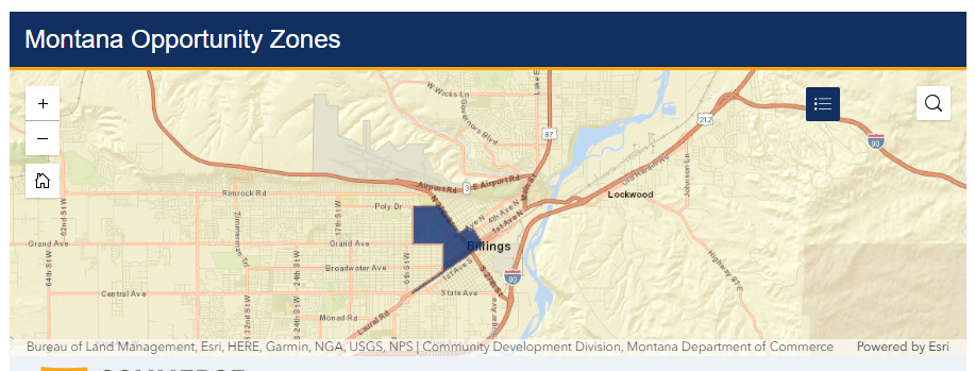
The designation of an Opportunity Zone was only to last for 10 years, and the one located in downtown Billings is set to expire at the end of 2026. Currently there are 25 qualified Opportunity Zones in Montana, set to expire on December 31, 2026.
Opportunity Zone 2.0
The One Big Beautiful Bill Act of 2025 made Opportunity Zones a permanent feature of the tax code, rather than a one-time benefit. The next round of zone designations kicks off July 1, 2026, when state governors begin a 90-day nomination window. New zones will subsequently take effect January 1, 2027 and last through December 31, 2036.
There have been some changes from the prior eligibility requirements. The Department of Housing and Urban Development has identified the following census tracts in Billings as those that are eligible for designation under the new requirements.
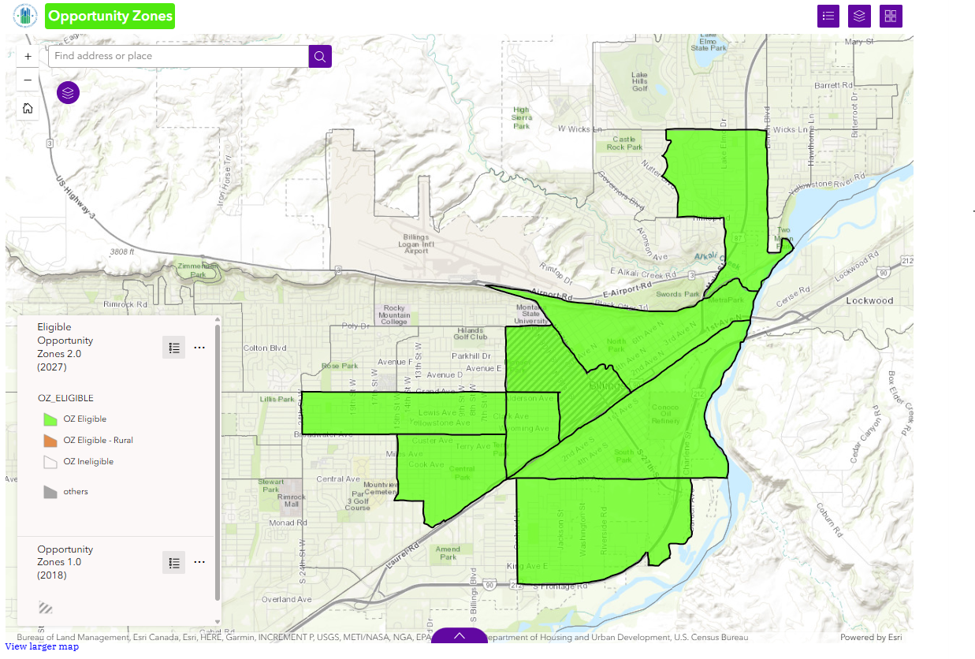
The City of Billings has 8 eligible census tracts that could be considered by the Governor, identified above. A map has been posted online which identifies all the eligible census tracts in the State of Montana: https://experience.arcgis.com/experience/8bf3114bcc744aad8ce4a787c0302bcc
Process:
In Montana there are 58 eligible census tracts, based upon the U.S. Census Bureau data. The Governor can nominate up to 25 of these tracts for final OZ 2.0.
The Governor's office has released the application, and will require one application for each census tract to be considered. Applications are due July 7, 2026 and final selections will be made in September.
The City of Billings should identify:
1.) Do we want to submit an application for designation as an Opportunity Zone?
2.) If so, which tracts should be considered?
3.) If multiple applications will be submitted (one required for each tract), what will the priority be?
The Zones themselves are comprised of low-income community census tracts and designated by governors of each State. The City of Billings currently has one designated Opportunity Zone located in downtown Billings.
The designation of an Opportunity Zone was only to last for 10 years, and the one located in downtown Billings is set to expire at the end of 2026. Currently there are 25 qualified Opportunity Zones in Montana, set to expire on December 31, 2026.
Opportunity Zone 2.0
The One Big Beautiful Bill Act of 2025 made Opportunity Zones a permanent feature of the tax code, rather than a one-time benefit. The next round of zone designations kicks off July 1, 2026, when state governors begin a 90-day nomination window. New zones will subsequently take effect January 1, 2027 and last through December 31, 2036.
There have been some changes from the prior eligibility requirements. The Department of Housing and Urban Development has identified the following census tracts in Billings as those that are eligible for designation under the new requirements.
The City of Billings has 8 eligible census tracts that could be considered by the Governor, identified above. A map has been posted online which identifies all the eligible census tracts in the State of Montana: https://experience.arcgis.com/experience/8bf3114bcc744aad8ce4a787c0302bcc
Process:
In Montana there are 58 eligible census tracts, based upon the U.S. Census Bureau data. The Governor can nominate up to 25 of these tracts for final OZ 2.0.
The Governor's office has released the application, and will require one application for each census tract to be considered. Applications are due July 7, 2026 and final selections will be made in September.
The City of Billings should identify:
1.) Do we want to submit an application for designation as an Opportunity Zone?
2.) If so, which tracts should be considered?
3.) If multiple applications will be submitted (one required for each tract), what will the priority be?
FISCAL EFFECTS
There is no direct fiscal impact to the City of Billings for identifying and applying for Opportunity Zone designation.
STAKEHOLDERS
ALTERNATIVES
Submit no applications;
Submit an application for one eligible census tract;
Submit applications for multiple eligible census tracts and prioritize them for the Governor’s consideration.
Submit an application for one eligible census tract;
Submit applications for multiple eligible census tracts and prioritize them for the Governor’s consideration.